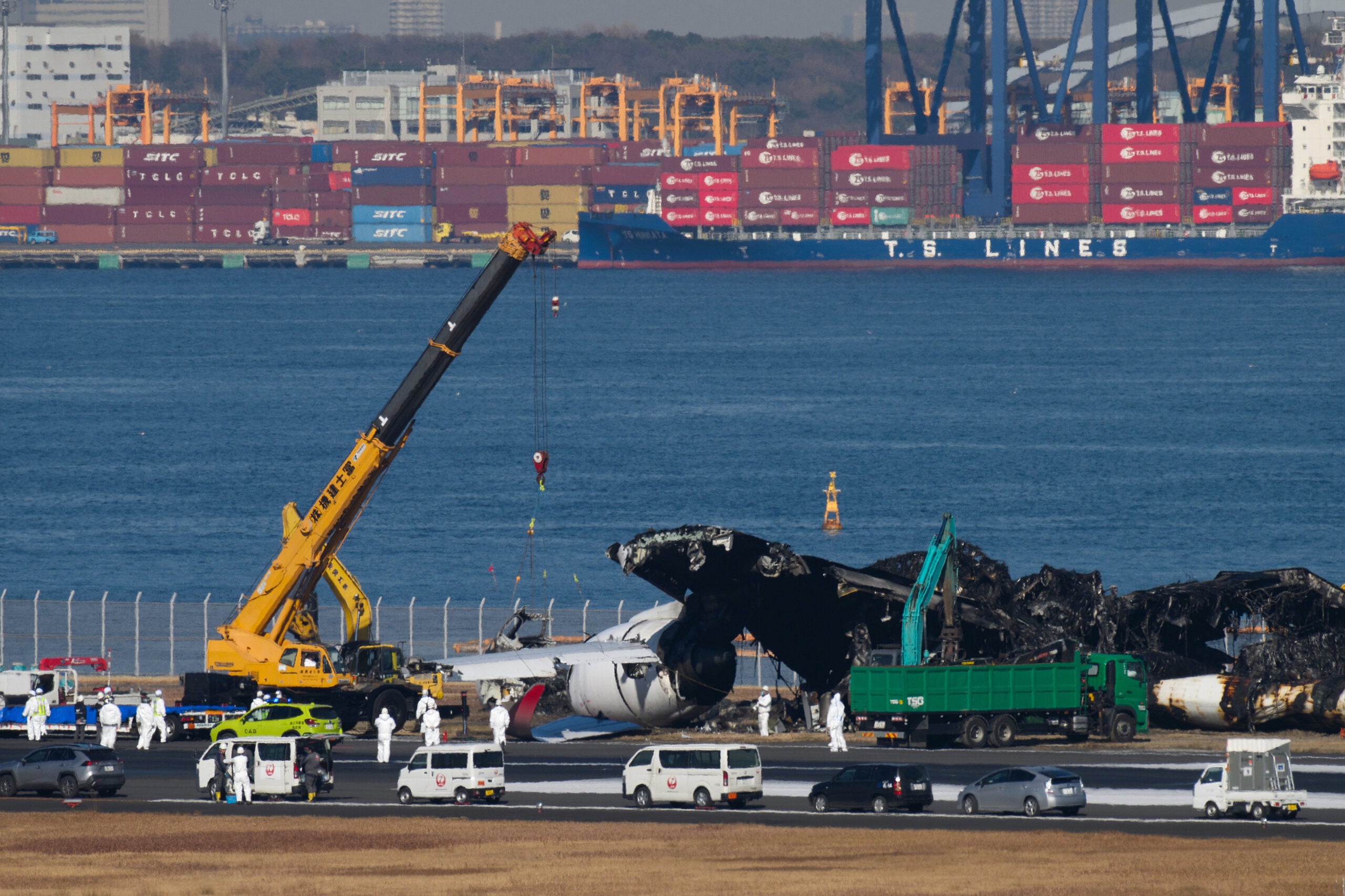
The crash between a Japan Airlines passenger jet and a Japanese coast guard airplane in Tokyo this week is resurfacing questions on requirements used to guage whether or not plane might be safely evacuated throughout emergencies.
It took about 18 minutes to evacuate Japan Airways Flight 516, an Airbus A350-900, the Wall Street Journal reported. That is regardless of plane certification necessities that the airplane may very well be evacuated inside 90 seconds, even with half of its emergency exits blocked, and checks that demonstrated that the airplane met that focus on.
Need extra aviation information? Sign up for TPG’s free biweekly Aviation newsletter.
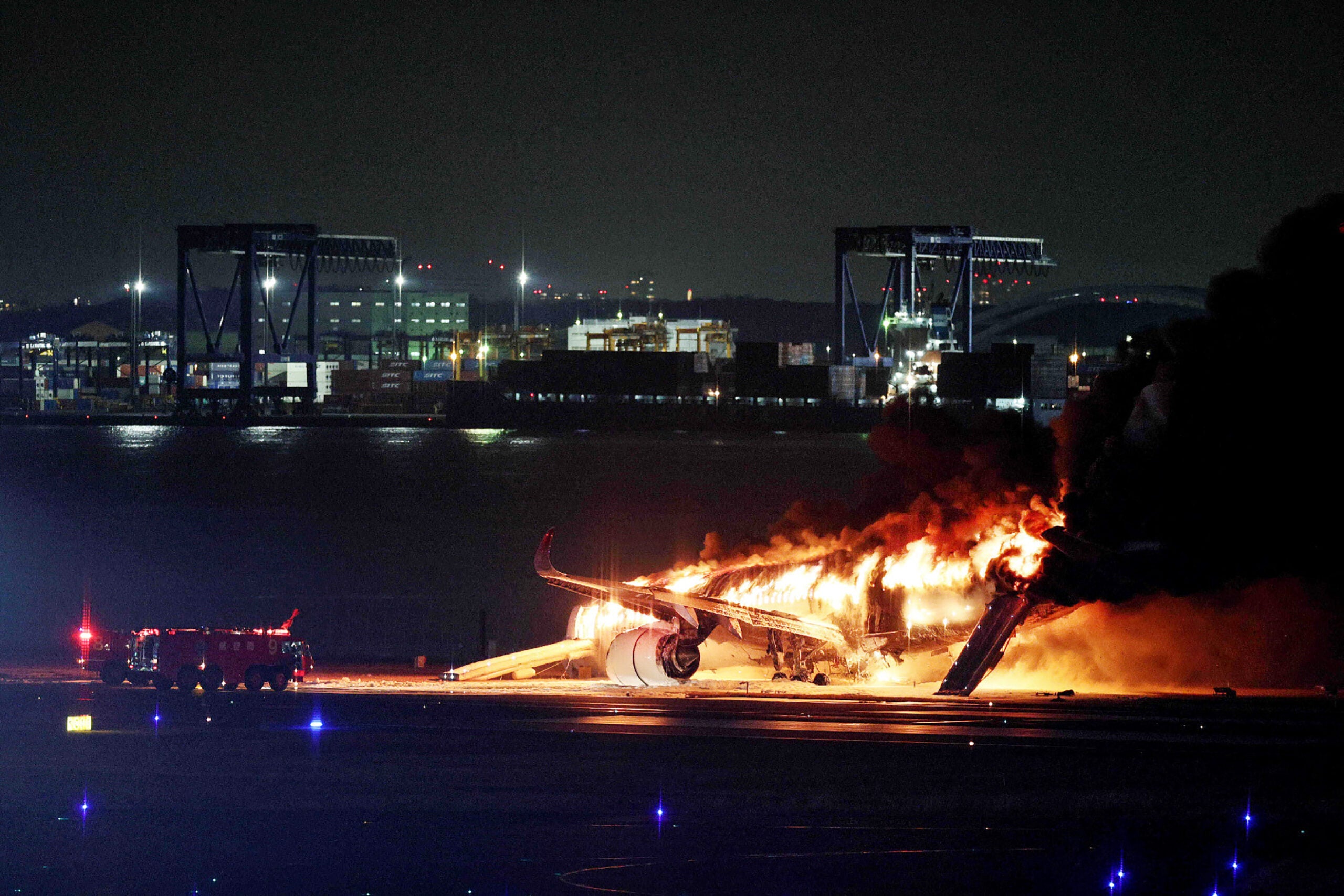
Though 5 of the six crew members aboard the coast guard plane had been killed, all 379 passengers and crew members aboard the JAL flight escaped safely, even because the airplane caught hearth and smoke stuffed the cabin. Solely a dozen minor accidents had been reported — issues like bumps, bruises and sprains from the journey down the evacuation slide.
The flight attendants on board have been widely credited with maintaining passengers calm and serving to guarantee an orderly evacuation, whereas the trendy design of the plane is seen as having helped to gradual the unfold of the preliminary hearth, giving passengers time to flee.
Nonetheless, the discrepancy between the theoretically achievable 90-second window and the time it took to evacuate in Tokyo has raised outdated questions on whether or not that window is even potential, whether or not certification checks mirror real-world situations and whether or not redesigning the take a look at would have unintended penalties.
Legislation introduced in the U.S. in late 2022 by Sens. Tammy Duckworth, D-Unwell., and Tammy Baldwin, D-Wis., would require the Federal Aviation Administration to check evacuation occasions utilizing a extra life like setting.
“Placing 60 folks on a part of a fuselage of an airplane and pretending that nobody has carry-on baggage, and there are not any kids and senior residents on board” does not mirror real-world situations, Duckworth advised TPG in a Zoom interview on the time. “I wrote the laws as a result of I noticed that these checks weren’t being completed in a sensible approach.”
A modified model of the laws is included within the pending invoice to reauthorize the FAA, which is predicted to cross this 12 months.
Duckworth — who sits on the Senate subcommittee for aviation and was a helicopter pilot for the U.S. Military earlier than dropping each legs throughout fight in Iraq — renewed calls to deal with the evacuation requirements this week following the JAL crash.
“What occurred in Tokyo this week was a tragedy, however one that would have been a lot worse—and whereas we cannot know the complete particulars for a while, I’ve been warning that one thing like this might occur within the U.S. for a very long time now,” Duckworth stated in a press release supplied by her workplace Friday.
The episode highlights the necessity to reassess the 90-second rule, Duckworth continued, to “lastly set up an emergency evacuation normal that takes real-life situations under consideration—such because the presence of carry-on baggage, kids, seniors and passengers with disabilities—so we will make flying as protected as potential. That is the least the flying public deserves.”
When first introducing the laws, Duckworth famous that ought to plane fail the 90-second take a look at beneath new requirements, airways wouldn’t essentially should make adjustments. Moderately, the findings may very well be that the usual is unrealistic, unhelpful or pointless, resulting in a change to the usual itself.
“I simply need to get the essential information,” Duckworth stated.
One impact may very well be to present pilots, flight attendants and floor rescue crews a brand new, extra life like real-world normal to coach to.
“I feel that finally it is going to make all people safer in the long term,” she stated throughout that 2022 interview. “However to have an arbitrary normal after which to finesse the take a look at so that you simply meet these requirements isn’t how FAA laws and security laws are presupposed to work.”
The reason for the Japan crash is beneath investigation, together with the response to the crash — together with the evacuation.
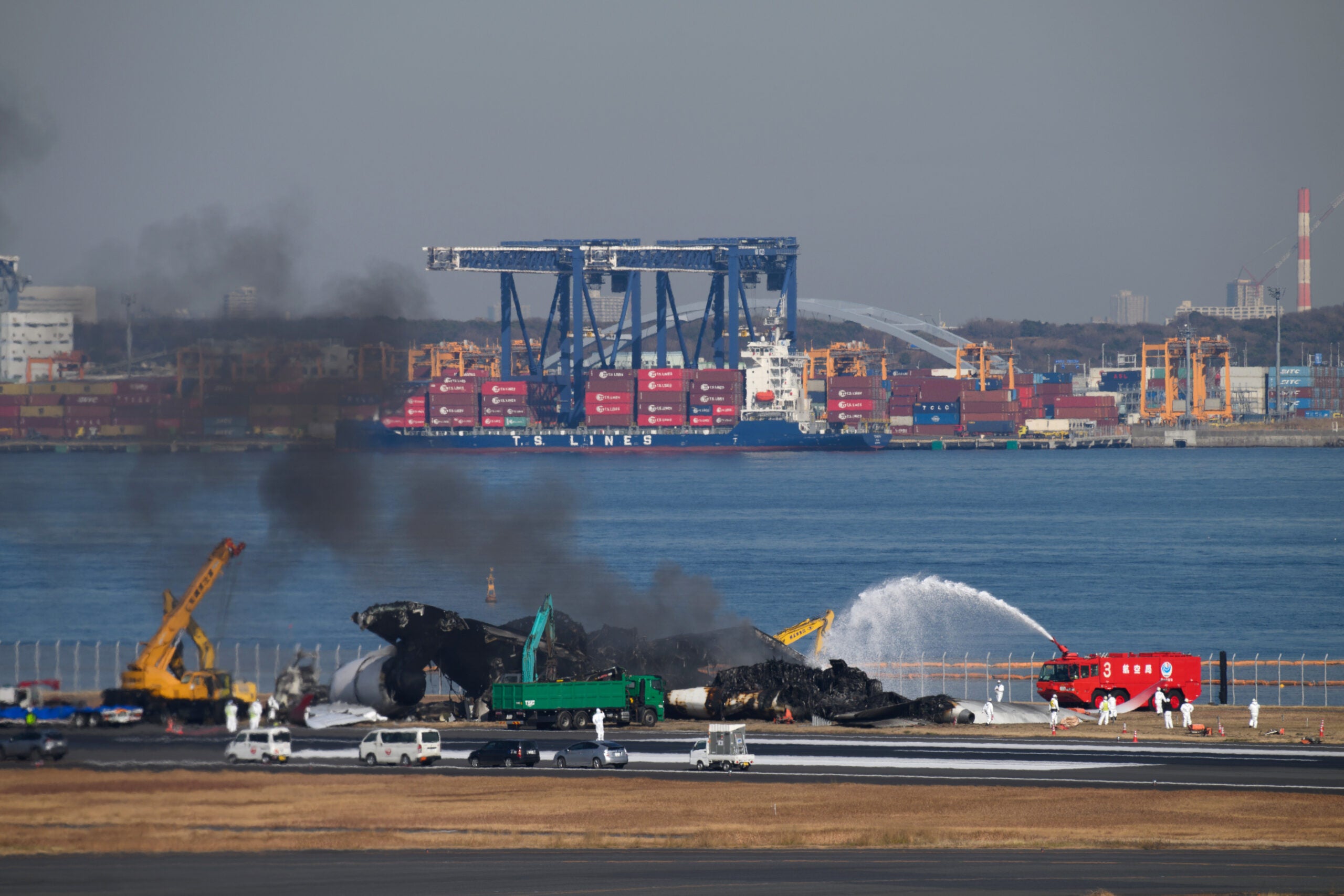
Because the remnants of the A350 smoldered on the runway at Haneda Airport, nonetheless, it remained clear that no matter how lengthy the evacuation took, some confluence of things prevented a tragedy from being considerably worse.
Trending Merchandise