Virgin Atlantic made historical past on Tuesday by crossing the Atlantic Ocean with a jetliner powered completely by sustainable aviation gasoline (SAF).
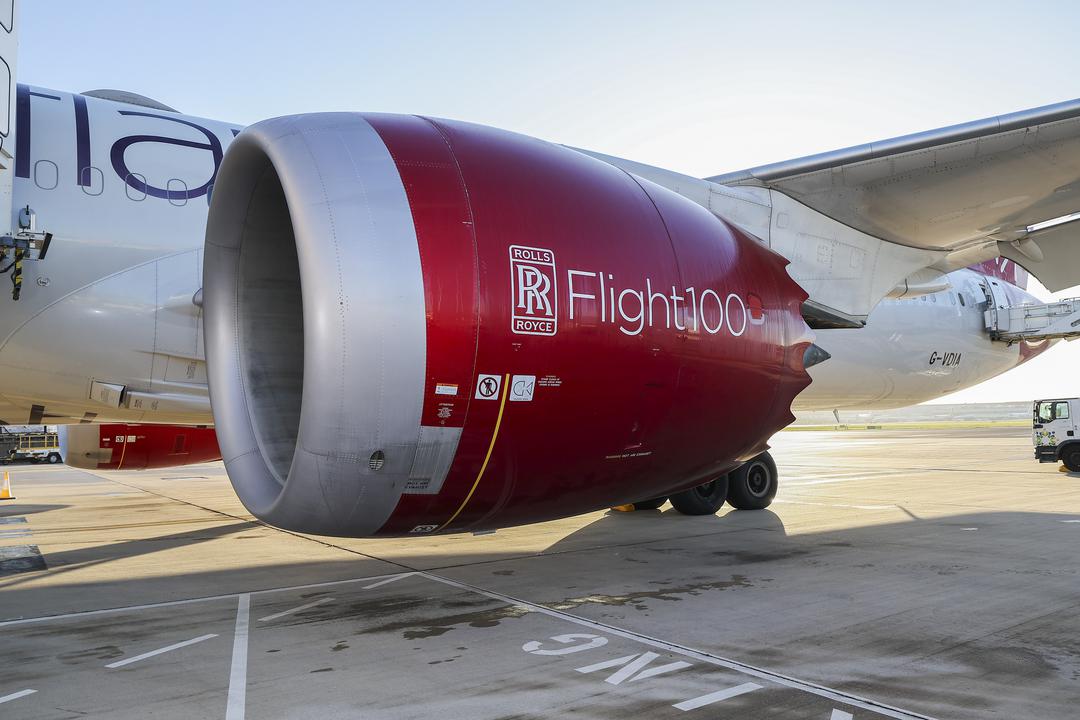
Flying from London’s Heathrow Airport (LHR) to New York’s John F. Kennedy Worldwide Airport (JFK), a Virgin Atlantic 787 Dreamliner — powered by twin Rolls Royce Trent 1000 engines — grew to become the primary industrial airplane to fly a airplane throughout the Atlantic utilizing 100% SAF, reasonably than conventional kerosene-based gasoline. It follows a similar demonstration flight by a Gulfstream G600 personal jet final week.
Need extra aviation information? Sign up for TPG’s free biweekly Aviation newsletter.
Tuesday’s flight, which was partially funded by the British authorities, has been extensively heralded as a proof of idea, of kinds, demonstrating the feasibility of the aviation trade’s plan to decarbonize within the coming years and many years. Whereas the flight didn’t carry paying passengers, airline founder Richard Branson, CEO Shai Weiss, and Britain’s transport minister Mark Harper had been on board, together with different executives, politicians, and media — together with TPG’s Nicky Kelvin.
SAF is produced from waste products, primarily from cooking oils, animal fat and byproducts of corn manufacturing. Whereas the fuels burn equally to kerosene and nonetheless produce emissions, the general “lifecycle” emissions are as much as 70% decrease — partly as a result of, by emitting carbon that had beforehand been absorbed by crops and animals, the fuels don’t contribute as many “new” carbon emissions into the air, versus the case when burning and producing fossil-based fuels.
Whereas industrial aviation generates 2% to three% of all emissions globally, in response to most estimates, it stays among the many most troublesome industries to decarbonize. Different vitality types like electrical energy stay many years away from being developed sufficient to work for long-haul flights, and essentially the most emission-heavy flights are inclined to cross oceans and continents, which means there is no greener different technique of transport that can be utilized.
Airlines have been bullish on SAF as a part of their plan to achieve “web zero” by 2050, together with different applied sciences like direct carbon capture. Airways undertaking that SAF will account for roughly 65% of the emissions reductions it hopes to realize by 2050.
The best way to get in: Best credit cards for airport lounge access
Nonetheless, there are quite a few challenges to the widespread adoption of SAF. Industrial engines usually are not but licensed to fly on greater than a mix of fifty% SAF — Tuesday’s flight acquired particular approval from U.Ok. regulators, and can fly again to London utilizing common gasoline.

Each day E-newsletter
Reward your inbox with the TPG Each day e-newsletter
Be part of over 700,000 readers for breaking information, in-depth guides and unique offers from TPG’s specialists
Provides of SAF and common manufacturing stay too low to enter widespread use. It is scarce and costly, and presently accounts for lower than 0.1% of aviation gasoline used internationally, in response to the BBC.
Airline bosses have mentioned that widespread adoption with out authorities help can be nearly unattainable attributable to present prices. Within the U.S., the Inflation Discount Act of 2022 consists of credit for SAF manufacturing which can be anticipated to contribute in the direction of scaling up manufacturing.
Critics have additionally argued that SAF have to be seen as a stepping stone, reasonably than an outright resolution, given potential environmental impacts of manufacturing it, together with redirecting land for agricultural use .
Cat Hewitt, coverage director on the Aviation Surroundings Federation, told CNN the flight was extra of a gimmick than a real step ahead.
“Till we’ve got genuinely zero-emission know-how out there for flying, there’s actually one factor that we all know positively works to chop aviation emissions — and that is to fly much less,” Hewitt mentioned.
Nonetheless, Tuesday’s flight is anticipated to boost consciousness of SAF and its potential to not less than have some optimistic influence, as gasoline producers, airline executives and engine producers proceed to work with regulators to hunt approval to make use of as much as 100% SAF on industrial flights.
Associated studying:
Trending Merchandise